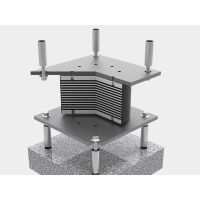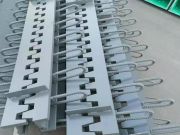
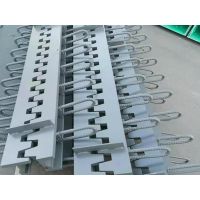
 Click to bigger picture..


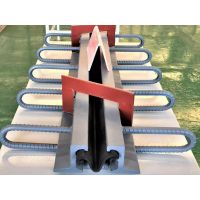
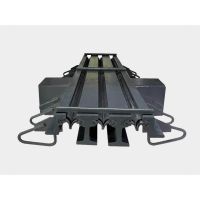
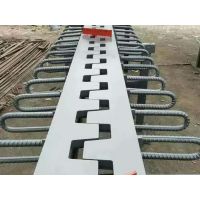
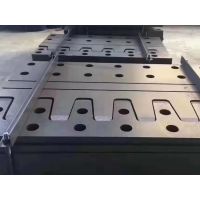
Finger Expansion Joints, also referred to as comb expansion joints or finger bridge joints, are precision-engineered structural components designed to accommodate the expansion, contraction, and lateral movements in bridge decks and large infrastructure. Aohong's Finger Expansion Joints feature interlocking steel plates shaped like 'fingers' that slide against each other, ensuring smooth structural movement while maintaining road surface integrity. These joints are ideal for absorbing movements caused by temperature fluctuations, dynamic traffic loads, and seismic events.
Structural Composition of Finger Expansion Joints
EachFinger Expansion Jointcomprises a combination offinger plates (tooth-shaped metal plates), substructure supports, anchor bars, and drainage systems. The finger plates can be fabricated in triangular, rectangular, sinusoidal, or oval tooth profiles. Anchoring devices are used to securely connect the joint to the deck structure, ensuring long-term stability. Optional rubber sealing strips and drainage channels are integrated to protect against water ingress and debris accumulation.
Types of Finger Expansion Joints
- Cantilever Finger Expansion Joints: Designed with symmetrical finger elements; best for expansion movements up to ±40 mm.
- Supported Finger Expansion Joints: Feature asymmetrical interlocking elements and substructure support; capable of handling movements over ±160 mm.
- PTFE-Integrated Finger Expansion Joints: Available on request to enhance low-friction sliding.