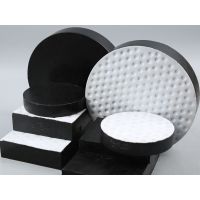
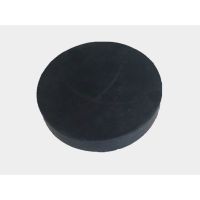
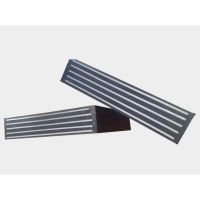

Aohong manufactures high-quality Neoprene Rubber Bearing Pads engineered to absorb vibration, distribute structural loads, and accommodate movement between concrete components. Designed for bridges, buildings, and heavy machinery foundations, these elastomeric pads provide excellent weather resistance, flexibility, and durability. Neoprene Rubber Bearing Pads are available in plain or laminated types, offering tailored performance for static and dynamic applications.
Specifications and Dimensions
- Thickness: 1/8” (3.18 mm) to 6” (152.4 mm), customizable up to 30”
- Width: 36” (914 mm) to 48” (1219 mm), or per project specifications
- Hardness: 50 ±5, 60 ±5, 70 ±5 Shore A
- Tensile Strength: ≥15.5 MPa (ASTM D 412)
- Elongation at Break: ≥300% (ISO 37)
- Operating Temperature: -40°C to +93°C
Plain Neoprene Rubber Bearing Pads
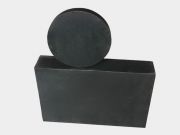
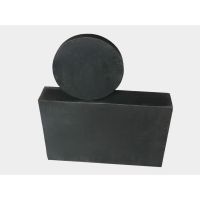
Plain Neoprene Rubber Bearing Pads are solid elastomeric pads without internal steel reinforcement. Ideal for low-movement applications, these pads offer high compressive strength and strong resistance to aging and ozone exposure. Typical applications include precast support, bridge beams, and structural bases.
Laminated Neoprene Rubber Bearing Pads
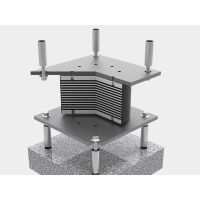
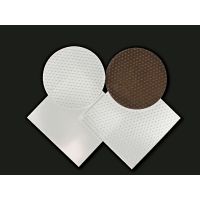
Laminated Neoprene Rubber Bearing Pads incorporate internal steel or PTFE layers to improve load distribution and resistance to movement and stress. These pads are well-suited for bridges and structures subject to dynamic loading, thermal expansion, or seismic activity. They allow for horizontal movement while maintaining vertical support, minimizing structural stress.
Applications
- Bridge Structures: Expansion joints, beam supports, highway overpasses
- Commercial Buildings: High-rise load transfer points, vibration isolation
- Industrial Installations: Equipment bases, seismic support for heavy machinery
- Public Infrastructure: Railway platforms, retaining walls, seismic retrofits
Features
- Low maintenance and long service life
- Excellent resistance to weather, ozone, UV, and chemicals
- Withstands compressive loads over 20 MPa
- Flexible under shear, ideal for load shifts and thermal movements
- Conforms to international standards including AASHTO M 251, EN 681-1, and ISO 4633