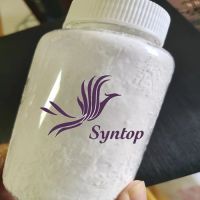

Improving processing performance: Acting as an internal and external lubricant during extrusion or injection moulding, it reduces friction between the material and the equipment, as well as between the material molecules themselves. This lowers the plasticising torque, thereby reducing energy consumption during processing, improving moulding efficiency and output, and ensuring smoother demoulding.
Enhancing Product Surface Quality: It migrates to the surface of the finished product to form a thin lubricating layer, significantly reducing the surface coefficient of friction to provide a smooth, silky feel. It also imparts a higher surface gloss and effectively prevents products from sticking together when stacked.
Acts as an excellent dispersant: Particularly when used in colour masterbatches and filler masterbatches, it effectively encapsulates pigment and filler particles, preventing agglomeration, ensuring more uniform colour distribution, and reducing defects such as colour spots or streaks on the product surface.